
The 1.5°C Supplier Engagement Guide
About the Supplier Engagement Guide
This interactive guide created by BSR, the Exponential Roadmap Initiative and the 1.5°C Supply Chain Leaders, provides practical guidance that any company can utilize to work with suppliers to set and implement a 1.5°C aligned target and move to action. This is also an approach that suppliers can cascade across their supply chain.
The 1.5°C Supplier Engagement Guide suggests a structure to harmonize buyers’ requirements and simplify supplier engagement on climate. It provides leading examples derived from the experiences of the 1.5°C Supply Chain Leaders, as well as other leading practices and frameworks for supplier engagement, and is aligned with the 1.5°C Business Playbook.
The Supply Chain Leaders
The 1.5°C Supply Chain Leaders work together to drive climate action throughout global supply chains, and support small and medium-sized enterprises (SMEs) through the SME Climate Hub, understanding the need to work with and support suppliers to halve emissions before 2030 and achieve net zero emissions before 2050.
The Supplier Action Guide
The Supplier Action Guide provides a practical framework that any company can use to work with suppliers to set and meet 1.5°C aligned targets, in hard copy format.
The Supplier Action Guide is aligned with science and the 1.5°C Business Playbook, linking to pillar 2 of the four-pillar-climate strategy it presents, on reducing your value chain emissions.
Latest News

Commodity Certificates as a Necessary Mechanism to Scale Solutions and Decarbonise Hard-to-Abate Sectors
Commodity certificates can help unlock the investment needed to scale low-carbon solutions in hard-to-abate sectors such as steel, cement and chemicals. This article explores how they can bridge the gap between emerging supply and global demand, while outlining the infrastructure needed to build a credible, trusted market.

Beyond Consensus: The Business Imperative for a Post-Fossil Fuel Future
The climate conversation is shifting from whether we must phase out fossil fuels to how quickly we can deliver a fair transition. At London Climate Action Week, ERI and FFTI brought business, investors and civil society together to focus on implementation, with a clear call for policy certainty, market reform and coordinated corporate action to scale fossil-free solutions.
The Solutions-driven market infrastructure: Unlocking growth while driving system-wide transition
During a hot morning at London Climate Action Week 2026, Exponential Roadmap Initiative (ERI) and Adapteo Group convened a roundtable around a deceptively simple question: If many of the solutions needed for the transition are already commercially viable, technically credible and ready to scale, why are markets still moving too slowly to deliver 1.5°C-aligned transitions?

Press release: Exponential Roadmap Initiative joins UN Climate Change Net-zero Recognition Framework pilot
The gap between climate pledges and climate delivery has become one of the defining credibility challenges of our time. The Net-zero Recognition Framework is an important step toward closing it by creating a transparent, UN-backed pathway that can distinguish companies that are genuinely transforming from those that are not.
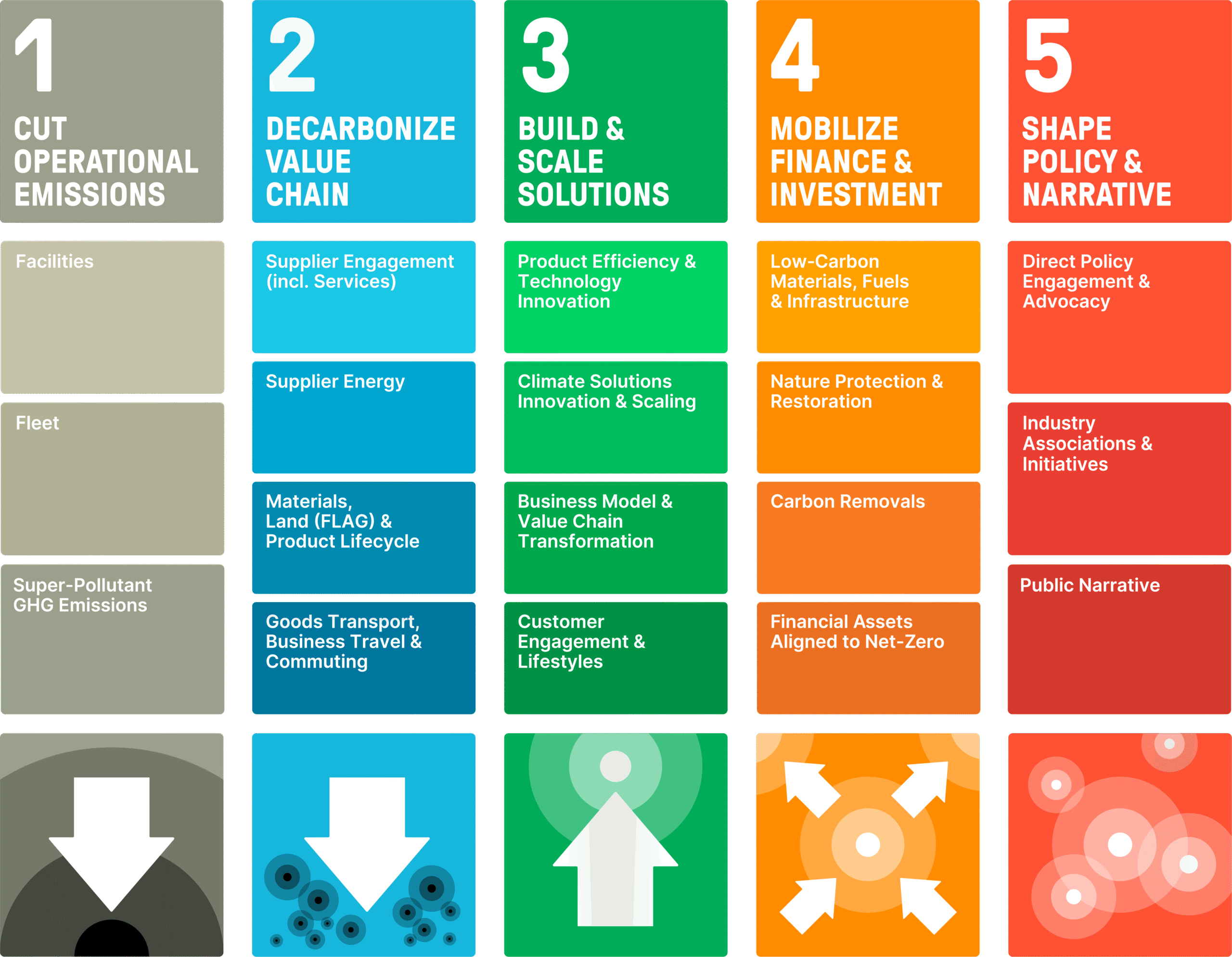
New Paper Makes the Case for a Holistic Five-Pillar Approach to Corporate Climate Leadership
Johan Falk’s newly launched paper “The Exponential Framework: Five Pillars to Win in the Earth-Aligned Economy,” asks companies to rethink what climate leadership actually means for a business that wants to grow.

New White Paper Calls on AI Hyperscalers to Align with Planetary Limits
A new white paper from the Exponential Roadmap Initiative delivers a clear message: as artificial intelligence scales at unprecedented speed, it must do so in a way that supports a stable planet.


